Legal
Privacy notice
Last updated on 25 October 2026
Who is responsible
The Global Innovation and Cultural Immersion Program is organised by Ernest E. Onuiri, in Nigeria. Ernest E. Onuiri is the data controller for the information described below, which means he decides what is collected and what happens to it, and he is personally answerable for it.
The programme operates under the name GICIP International Frontier Services. That is a trading name and not a registered company: there is no incorporated body behind it, which is why the controller named above is a person. If a company is registered later and takes over, anyone who has given us information will be told before it happens.
What this notice covers
Three things, because they are run by the same person and it would be no help to you to split them across three documents: this marketing site, the public application surface, and the programme itself once you have a place on a cohort.
It does not cover what somebody else does with your information. A host organisation that asks visitors to sign in at reception, an embassy deciding a visa, an airline, a hotel, or your own university all decide for themselves what they collect and why, and each is answerable for that rather than us.
What this site collects
Only what you type into it. There is no account to create, nothing is collected in the background, and reading these pages leaves nothing behind.
- If you apply. The application surface collects your name, email, date of birth, stated interest, consent to the terms and privacy notice, and the account and application events needed to continue. The records are sent to the GICIP OS API and are used to assess and administer the application.
- If you subscribe. Your email address, and nothing else. The list is not open at the moment, so the field is closed and no address is being collected.
- If you write to us. Whatever you put in the email, which reaches a mailbox rather than this website.
Nothing you type is saved in your browser.
Going to the platform
This website is where GICIP explains itself, and the apply host is where an applicant starts an application. The application surface is a separate host of this public app; its records are handled by GICIP OS, which is also the system used to manage a cohort.
GICIP OS is GICIP's, not a third party's, and the controller named above is the controller there too. The application host sends the information you enter to its API over the authenticated application flow.
What the programme collects
Once you take a place on a cohort, the programme has to assemble what a consulate, an airline and a host organisation each require before a group can travel. This is the part worth reading before you commit, because it is far more than a website form.
- Identity and travel documents. Your international passport and its data pages, passport photographs, birth certificate or sworn declaration of age, and any previous passport carrying travel history.
- Your visa file. Whatever the consulate asks a group application to contain, which has included proof of study or employment, transcripts, admission letters, a letter of introduction, travel insurance and a full itinerary.
- Proof of funds, and your sponsor's. Bank statements, a sponsor's identity document and their written consent to use it. Where a parent or sponsor provides these, we are handling their information as well as yours and this notice applies to them too.
- Health and safety information. A declaration of fitness to travel, any medical or dietary need we must plan around, and a next of kin we can reach in an emergency.
- Programme records. Your CV, the work you submit, attendance at sessions and visits, the reports you write, and the record of what you were issued, including a certificate of participation.
- Payment records. What was paid, when, by whom and against which instalment. The bank details themselves sit with the payment provider.
You are told what is needed and when. Nothing on this list is collected speculatively, and a document asked for one year is not kept on file for a cohort you are not on.
Where it comes from
Most of what we hold you gave us. Two things do not come from you directly, and you should know about both.
Where the programme runs through a university, that university may confirm your academic standing and your conduct record, because eligibility turns on them. And a host organisation that requires a visitor list is given the names of the people visiting it, which come from the cohort list rather than from each of you separately.
Why, and on what legal basis
Under section 25 of the Nigeria Data Protection Act 2023, we have to have a lawful basis for handling your information, and tell you what it is.
- To assess your application and write back to you. The basis is the steps taken at your request before entering into an agreement, and your consent, which you give by sending the form.
- To tell you when applications open, if you asked. The basis is your consent, which you can withdraw at any time by replying to any message we send or by writing to the address below.
- To answer an email you sent us. The basis is our legitimate interest in replying to people who contact the programme.
- To get a cohort to Europe and back. Visa applications, flights, insurance, accommodation and host arrangements. The basis is the agreement you sign when you take a place, because none of it can be done without this information.
- To keep you safe while you are away. Medical and next-of-kin information, used only when there is a reason to. The basis is your vital interests and ours in running a group responsibly.
- To meet obligations we cannot refuse. What a consulate, an airline or a government requires of us. The basis is legal obligation, and declining to provide it generally means the travel cannot happen.
Your information is not sold, and it is not used to advertise anything to you. There is no profiling and no automated decision making: an application is read by a person.
Sending information outside Nigeria
A European trip cannot be arranged without sending information to Europe. Visa files go to the consulate of the country that will decide them, and booking details go to airlines and hotels in the countries on the route.
Those countries have their own data protection laws, and in the case of the European Union a stricter regime than Nigeria's. Under section 41 of the Nigeria Data Protection Act we transfer on the basis that it is necessary to perform the agreement we have with you, and we send only what each recipient's own process requires.
Photographs and publicity
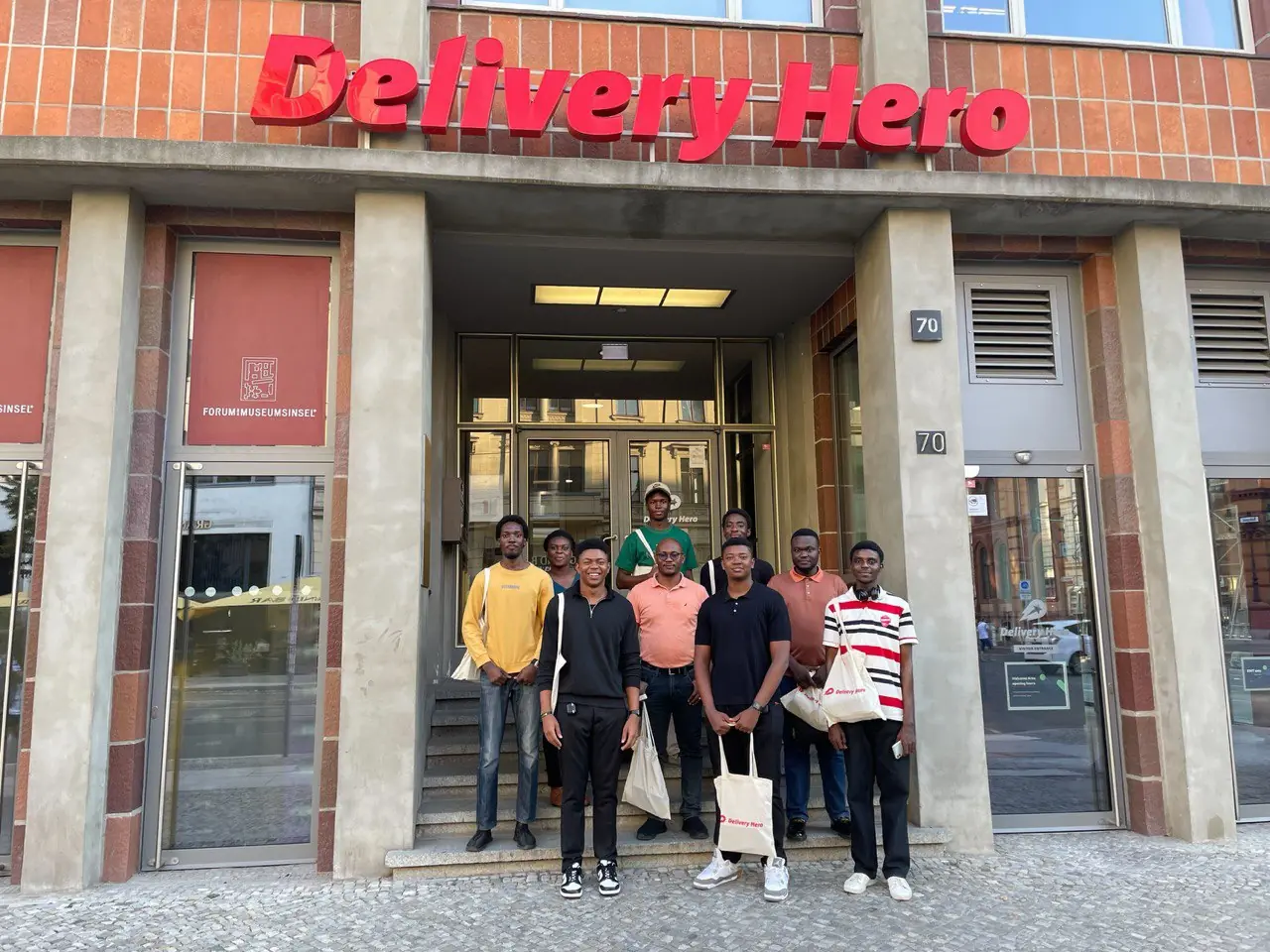
Cohorts photograph themselves constantly, and some of those pictures end up on this site. We publish a photograph only where the programme holds permission to, and nobody on this site is named in a caption or in the description read out by a screen reader.
If you are in a picture here and would rather not be, write to us and it comes down. You do not have to give a reason, and asking does not affect your place on anything.
Separately, a host organisation sometimes asks visitors to sign its own publicity release before a visit. That is an agreement between you and them, on their terms, and we pass the form on rather than deciding it.
How long it is kept
An application is kept for the cohort it was made for, and for two years afterwards, so that an applicant who was not selected can be considered for the next one without starting again. Tell us to delete it sooner and we will.
A subscription is kept until you unsubscribe. An email you sent is kept as long as the mailbox holds it.
Programme records are kept longer, and for different reasons. Visa and travel paperwork is kept while the cohort is away and for as long afterwards as a consulate or an insurer might reasonably ask about it. Payment records are kept for as long as financial records have to be. Your certificate and the record behind it are kept indefinitely, because the point of a certificate is that it can still be verified years later. Anything we no longer have a reason to hold is deleted.
How it is protected
The site is served over an encrypted connection, and what you submit is encrypted in transit. Access to applications is limited to the people running the programme.
No website can promise that nothing will ever go wrong. Section 40 of the Act sets the timetable we work to if something does: a breach likely to risk your rights is reported to the Nigeria Data Protection Commission within 72 hours of our becoming aware of it, and where the risk to you is high you are told directly, in plain language, without waiting for the Commission.
Your rights
Under the Nigeria Data Protection Act 2023 you can ask us, free of charge, to do any of the following. Write to the address below and we will answer within one month.
- See a copy of what we hold about you.
- Correct anything that is wrong, or complete anything missing.
- Delete it, where there is no reason for us to keep it.
- Object to our using it, where we are relying on our own legitimate interest.
- Stop using it, or restrict what we do with it.
- Receive it in a portable form, or have it sent elsewhere.
- Withdraw your consent, which is as easy to do as it was to give.
Withdrawing consent does not undo anything done before you withdrew it. If you think we have handled your information badly, tell us first so we can put it right, and you may also complain to the Nigeria Data Protection Commission.
Who supervises this
The Nigeria Data Protection Commission regulates how your information is handled under the Act, and it is the body you complain to if we get it wrong.
The Act requires a data protection officer of organisations it classes as data controllers of major importance, and registration with the Commission on the same footing. GICIP has not been designated one and has not registered on that basis. We say so plainly rather than leaving it to be inferred: if that changes, this paragraph changes with it, and the officer's contact details appear here.
Until then, data protection questions go to the same place as everything else in this notice, and are answered by the person named at the top of it rather than by a function that does not exist here.
Applicants under 18
The programme is for university students and early-career professionals, and most applicants are adults. If you are under 18, ask a parent or guardian before you apply, and we will ask for their consent before taking your application further.
Changes to this notice
When this notice changes, the date at the top of the page changes with it. A change that affects what we do with information already given to us is one we will tell you about rather than leave you to notice.
How to reach us
Write to Ernest E. Onuiri at the programme office. The email address is on every page of this site, in the bar at the top and in the footer, and it is the fastest route for anything in this notice. Post reaches us at Babcock University, Ilishan-Remo, Ogun State, Nigeria.