Questions
The Things People Ask Us.
Short answers, and the honest ones where GICIP has not published a figure yet.
Applying
Who the programme is for, and how a place is decided.
Who can apply?
University students and early-career professionals. GICIP has run at Babcock University since 2017 and participants have come through the programme office there, so if you are a Babcock student that is the route you already have. If you are not, write to the programme office and the team will tell you where you stand.
What are the entry requirements?
A cumulative grade point average of at least 2.00, a recent citizenship grade of A or B held up to departure, being eighteen when the cohort travels, a medical fitness letter from Babcock University Teaching Hospital, and a passport valid past the return date. The programme page sets all six out, including what the consulate may ask about funds.
How are participants selected?
Applications go through academic and readiness screening, which is the first part of phase one. Places are limited and the decision is the programme's. Everybody who applies hears back.
When is the next cohort, and when do applications close?
The 2027 cohort's travel dates have not been published. The registration band at the foot of every page carries the closing date as soon as there is one to carry, and the application page repeats it. Both are set by the programme office for each cohort.
What does it cost?
Recent cohorts have paid between €5,000 and €6,000 to the programme, covering visas and insurance, flights, all ground transport, accommodation for the whole stay, and every visit and tour. Budget around €1,000 on top for food, which is not paid to the programme. The figure moves with the route, so the programme office quotes each cohort its own.
Is it paid all at once?
No. Recent cohorts have paid in four instalments across the year before departure, beginning with a commitment payment that secures the place and is not refundable. The schedule is set per cohort by the programme office, and the payments and refunds page sets out the whole position.
What happens to my money if I have to pull out?
The commitment payment that secures a place is not returned. Anything paid after it is assessed against what the programme has already committed on your behalf: visa fees, tickets and accommodation deposits, paid months ahead. What is left is refunded, and the payments and refunds page sets out each case, including a visa refusal and a cohort that does not run.
Do I need a passport and a visa?
Yes, and you are not left to work it out alone: visa and documentation is a workstream inside phase one, alongside the pre-departure curriculum. Visas are granted by governments rather than by the programme, so no cohort can promise one.
What if I cannot travel internationally?
The programme runs alongside local exposure visits organised through Google Developer Groups on Campus at Babcock. That exists so the pipeline does not depend on a participant being able to afford international travel.
On the programme
What actually happens, in what order, and where.
How does a cohort run?
Four phases in one term: selection and preparation, then the immersion itself, then conversion, which is the debrief work that turns the trip into a CV, a target company list and follow-ups sent while the contact is still fresh, and then follow-through. The trip is phase two of four, not the whole thing.
What does a normal day look like?
Hosted company visits start mid-morning on weekdays, and the days without one are spent at the bootcamp working through projects. Saturday is kept as Sabbath with a local congregation, as a Babcock University programme does. Sunday is the city: museums, landmarks and being somewhere new.
Where do cohorts go?
Eight countries since 2017, across Europe, the Gulf and the United States. Each cohort's itinerary is set for that cohort, so the destinations page is a record of where the programme has been rather than a menu to choose from.
Which organisations host a cohort?
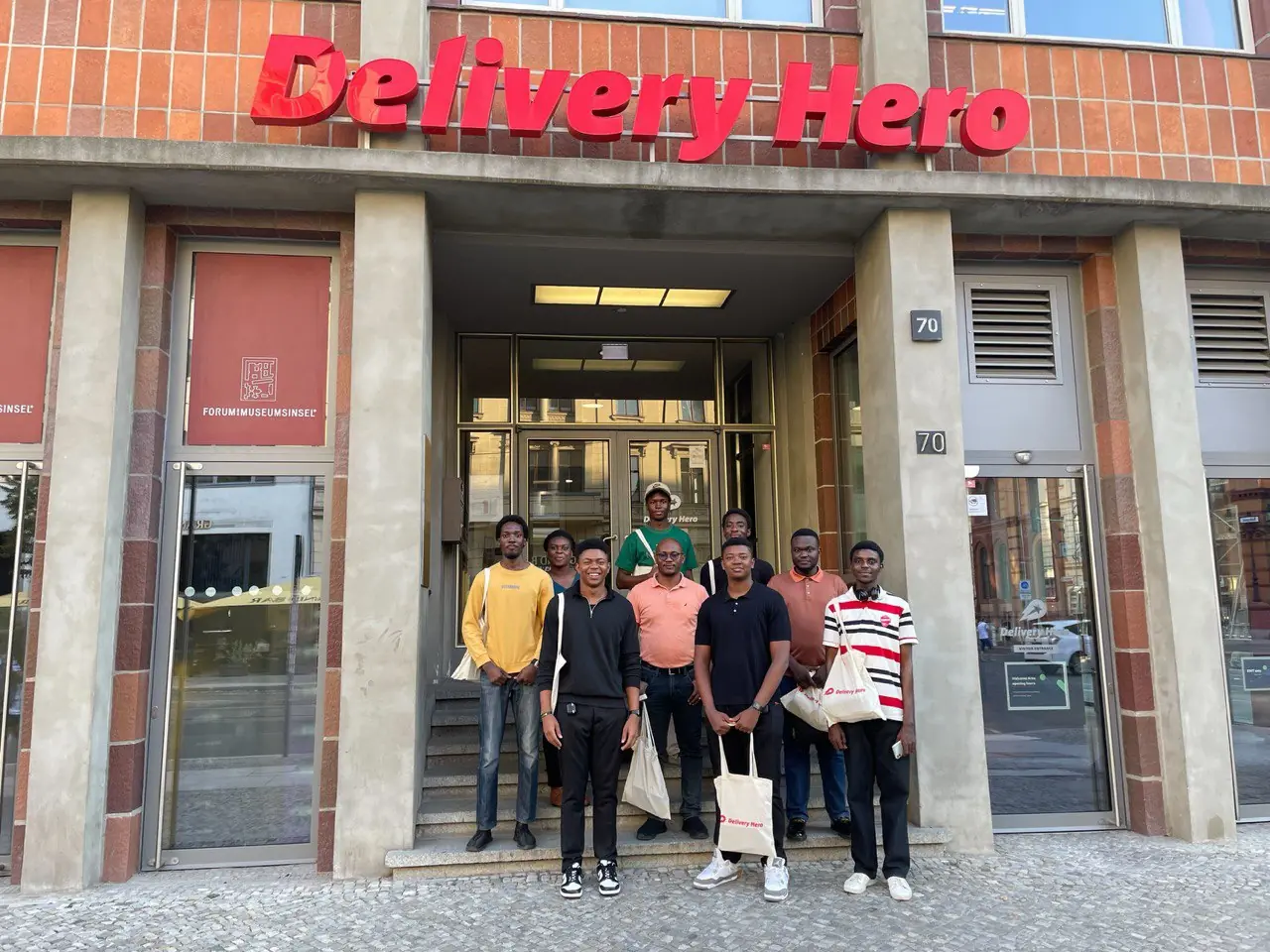
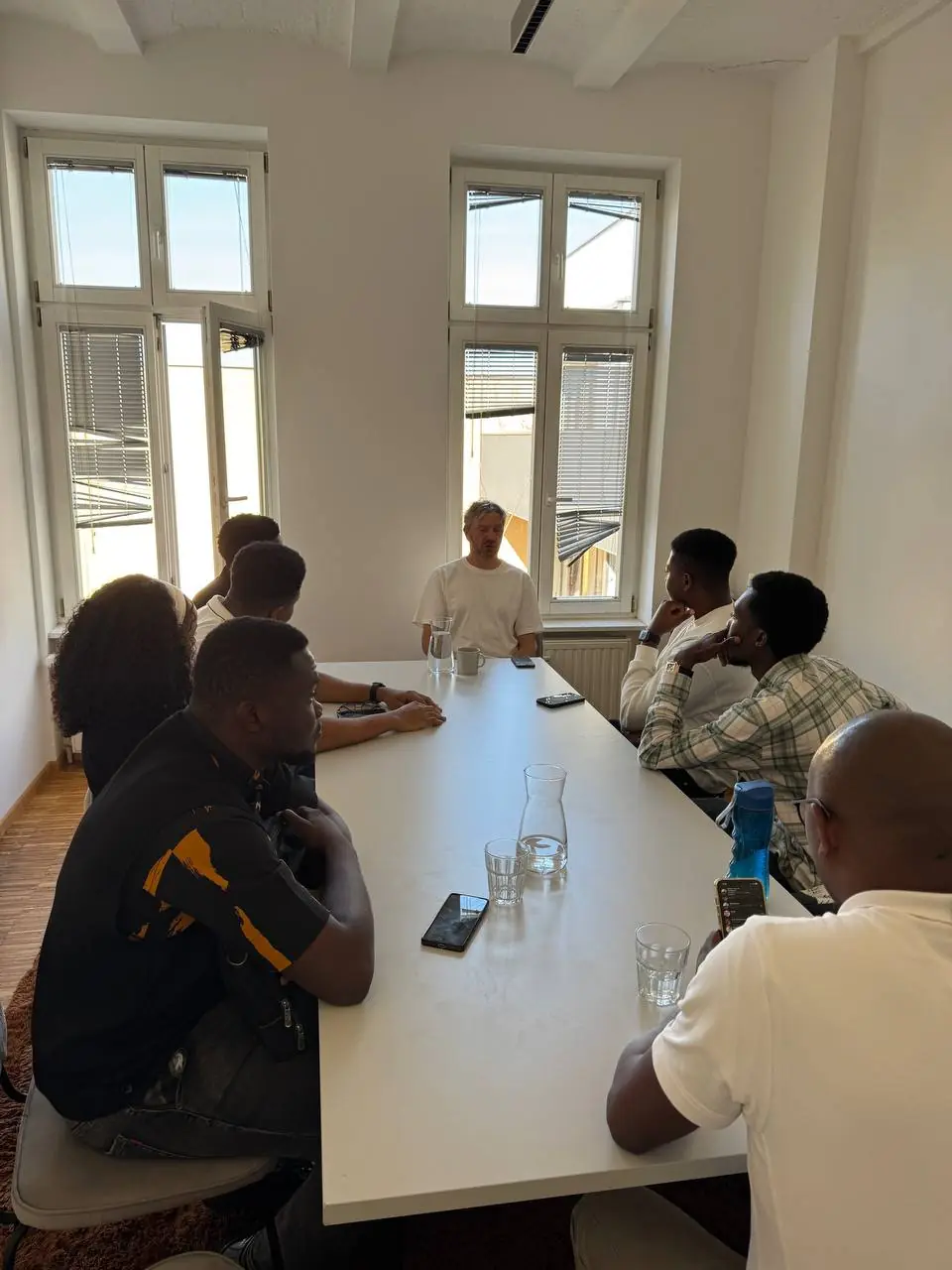
Twenty-one organisations across the programme's history, including Google, Meta, Amazon Web Services, X, SAP, Oracle, Carl Zeiss, Staffbase, Delivery Hero, Wolt, Contentful, CARIAD, DTEC Dubai, Berlin Partner, 42 Berlin, the United Nations Office at Vienna and the International Criminal Court. The host organisations page lists them year by year. Every visit has a brief and a set of questions participants prepare in advance.
How long is it?
The four phases run across a term, and the time abroad is a part of that rather than all of it. Every cohort since 2024 has been away six weeks: 15 August to 27 September in 2024, 14 August to 25 September in 2025, and 6 August to 18 September in 2026.
Afterwards
The part that decides whether any of it changed a career.
What happens when the trip ends?
Career support continues, and it is run rather than offered: application cycles with a deadline and an evidence standard, a CV held to a published one-page standard, and one-to-one growth sessions for participants who keep to the timelines. The cycles repeat until a role is secured.
Does GICIP find me a job?
No, and anybody who promises that is selling something else. What the programme does is put you in the room, teach you how to follow up while a contact is still warm, and stay with you through the search. Participants have gone on to Google, Meta, Amazon and Moniepoint.
Can alumni stay involved?
Yes. Phase four is alumni tracking and referral into the network, and returning participants come back as mentors for the next cohort. Alumni who can open a door in a city the programme has not reached are exactly who the host organisations page is asking for.
Still asking
Write to the programme office
One address reaches the people running GICIP. Pick the line that fits and your message arrives already sorted.
The programme office address is not published yet.
Applicants
Whether you are eligible, when the next cohort opens, and anything the form does not cover.
Ask about applyingParents and sponsors
What a place costs, how the instalments work, and how a cohort is supervised while it is away.
Ask as a parent or sponsorOrganisations
If your organisation could receive a cohort, or open a door in a city the programme has not reached.
Offer to host a cohortAlumni and press
Past participants with an introduction to make, and anyone writing about the programme.
Write as alumni or press